
The Socio-Economic Registry (PSER) is a government initiative designed to collect and maintain socio-economic data of households across Punjab to support the fair distribution of welfare programmes and financial assistance. y999 game If you are looking for PSER Online Registration 2025–2026, it is important to understand the registration process, eligibility requirements, and the documents needed to HH98 Game complete your application successfully.M999 Game A detailed guide can help you learn how to register online, update your household information, check your registration status, and Play Rupees Game avoid common mistakes during the process.188 PKR Game Download Keeping your PSER record accurate and up to date may be necessary for eligibility assessment in government social support schemes that use PSER data. Since programme requirements and registration procedures may change over time, always verify the latest information through the official Punjab Govern FBISE Admission 2026 ment PSER portal or the relevant government department before submitting your application.The LESCO Online Bill service helps consumers review their electricity bill without visiting an office.
PSER(Punjab Socio-Economic Registry) (PSER Online Registration 2025 2026 ) Get Detailed Guide
What is PSER?
For citizens, PSER offers a simple and transparent jeeto 786 game download eto access a wide Teen Patti range of Teen Patti Gold government BlooKet App, be S9 game nefits, Slots 777 Party Game including WinPKR App financial Winpkr Game assistance, Winpkr APK subsidies, and social protection programmes. Eligible families can register their information, update their records when needed, and become part of a central system used PKR68 to assess eligibility for various initiatives. This streamlined approach not only speeds up 3rrr Live the distribution of support but also promotes fairness, accountability, and equal access 88efgame.cc government services, helping deserving households receive timely assistance. https://royalx-casino.cc/
royalxcasino The royalxcasino Socio-Economic M666 Game (PSER) plays in wwb777 improving Y333 the jj77 of HH98 social by Vk999 maintaining an 666D accurate and Winpkr download regularly Download Yo Game updated Ludo Battle Game database of households across Punjab. HH98 Game co 777cb in 10win help Win786 dep n999 iden betpkr amilies top3patti.com.pk on win pkr a M999 so Royal casino a Royal casino that CB777 a Y99 the 2jbet a 2j bet who Win786 Game genuinely need it.Y333 Game on verified data, 3 patti blue download can reduce errors, minimise duplicate and allo cate And pure u 786 Game more And while the and of Z777 game schemes.Socio XC777 Economic hh98 and 3 Patti Loot 1JJ Game is Dk999 needs and that 6sixgame the right hh98 system designed to recoid the ncome 7777cb and details of across Punjab. It the https://777pak.com.pk/
| Name Survey | PSER (Punjab Socio-Economic Registry) Survey |
| Starting Date | 23 April 2025 |
| Survey Location | Punjab Province |
| No. of Programs | 10+ |
| Helpline | 0800-02345 |
| Centers | 12,000 across Punjab |

Purpose of the Provincial / Punjab Socio-Economic Registry
The main purpose of this registry is to build a reliable database of families. This information helps government departments plan welfare programs, identify eligible households, and improve the delivery of social support while reducing duplication and increasing transparency. Similarly, people visit 888 game
to explore its earning features and understand the platform’s available options.
Difference Between PSER, NSER, and Other Registries
Why Punjab Launched an Updated PSER System in 2026 Royal Casino
The 2026 update was introduced to improve accuracy, make the portal easier to use, and connect citizens to new welfare schemes. As economic conditions change, the updated system helps identify families who need support during difficult times, especially in food security, healthcare, education, and financial relief.
Who Should Use PSER?
PSER is designed for:
Latest PSER Updates (2025–2026)
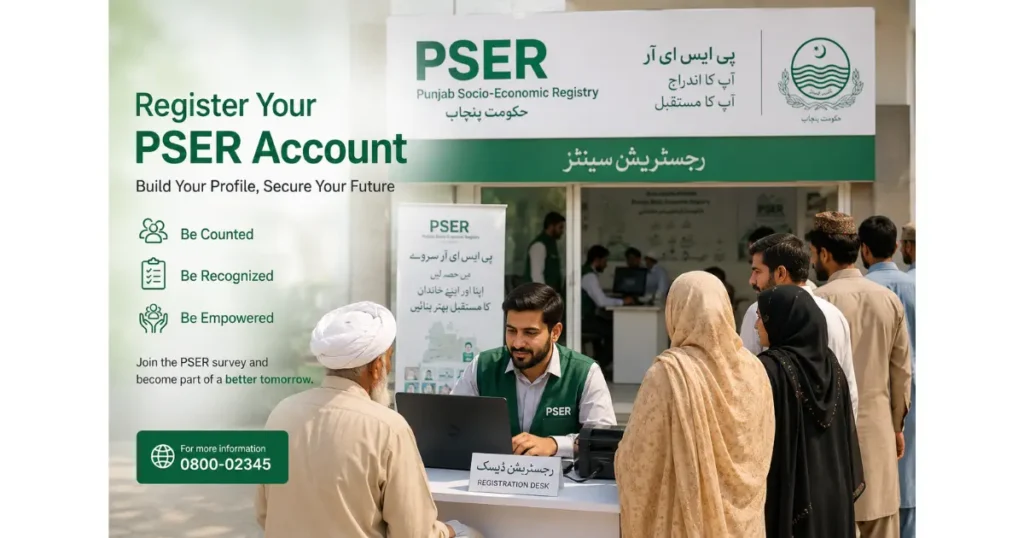
New Survey 2026 Announcement
A fresh survey cycle has started to update household information. Families can update their details online or wait for field teams to visit.
Online Registration Improvements
The registration form has been simplified. Users can create accounts more easily, reset passwords quickly, and complete applications without delays.
Portal Upgrades & New Verification System
The portal now verifies information through automated checks, improving the accuracy of records. Mobile number confirmations and CNIC validation have also been strengthened.
Key Government Programs Using PSER Data
Several welfare schemes rely on PSER records to approve applicants. This ensures help reaches families who genuinely qualify.
Latest News & Notifications
Regular updates are posted on the portal, including registration deadlines, survey schedules, and eligibility changes for various programs.
Ramadan and Relief Package Updates
Special relief packages during Ramadan are often linked to PSER data. Families with verified information receive assistance faster.
Integration With 8171, 8070, 9999, and Other Portals
PSER now works alongside multiple government systems. This connection helps streamline eligibility checks for ration assistance, cash support, and other welfare initiatives.
Benefits of PSER Registration
Access to Government Financial Assistance
Registered households can qualify for financial support, food relief, education assistance, and other welfare benefits.
Eligibility for Subsidies, Relief, and New Schemes
Once a family is registered, the system automatically checks eligibility for upcoming programs. This ensures citizens don’t miss opportunities.
Household Welfare Profiling Benefits
The registry provides a complete picture of each household, helping authorities understand living conditions and design more effective policies.
Fast-Track Approval for Major Punjab Programs
Families with updated records often receive quicker approvals for relief schemes, saving time and reducing paperwork.
Automatic Enrollment Opportunities
Some schemes automatically enroll eligible families based on their PSER profile, without requiring separate applications.
Why Registering Early Matters in 2026
Updating your details early helps ensure accuracy and protects your eligibility for future programs expected to launch throughout the year.
Eligibility Criteria for PSER (2026)
Income, Assets, and Household Indicators
Eligibility depends on income levels, home conditions, assets, and other economic indicators. Lower-income families are prioritized.
Required Demographic Data
Details such as age, family size, marital status, and CNIC information are reviewed to complete verification.
Urban vs Rural Eligibility Differences
The criteria may differ slightly between urban and rural households since living patterns and costs vary.
Who Is NOT Eligible
Families with high income, commercial properties, luxury vehicles, or significant financial assets may not qualify for certain benefits.
Special Eligibility Rules
Some groups receive special consideration:
Required Documents for PSER Registration (2026)
CNIC
A valid CNIC is required for all adult family members.
Family Data & Household Details
Information about family members, household size, living arrangement, and income sources must be provided.
Proof of Residence
This includes a home address, rental agreement, or any local proof confirming where you live.
Utility Bills
Electricity, gas, or water bill copies help verify household information.
Land or Agriculture Records (If Applicable)
Farmers may need to share land records, crop details, or agriculture-related documentation.
Disability Certificate (If Applicable)
Individuals with disabilities must present documentation for verification to qualify for specialized support.
How to Register for PSER Online (2026 Step-by-Step Guide)
Step 1: Visit the PSER Portal
Open your web browser and go to the official PSER portal: pser.punjab.gov.pk. Ensure you are on the correct website to avoid phishing or fake portals.
Step 2: Create Account / New Registration
Click on “New Registration” to start creating your account. Provide basic details to initiate the process.
Step 3: Enter Personal Information
Fill in your personal details, including name, CNIC number, date of birth, and family information, accurately.
Step 4: Set & Confirm Password
Create a secure password for your account. Confirm it to ensure there are no errors during login.
Step 5: Complete Registration Form
Enter all required household and demographic information carefully. Double-check for accuracy.
Step 6: Verify Mobile Number
A verification code (OTP) will be sent to your mobile. Enter it on the portal to validate your account.
Step 7: Submit Application
Review all details, ensure accuracy, and submit your registration. You will receive a confirmation message once your account is successfully created.
How to Apply for PSER Programs (2026 Guide)
PSER Punjab Gov Pk Registration 2026
Log in to Your Account
Use your registered credentials to log in to the PSER portal.
Open “New Application.”
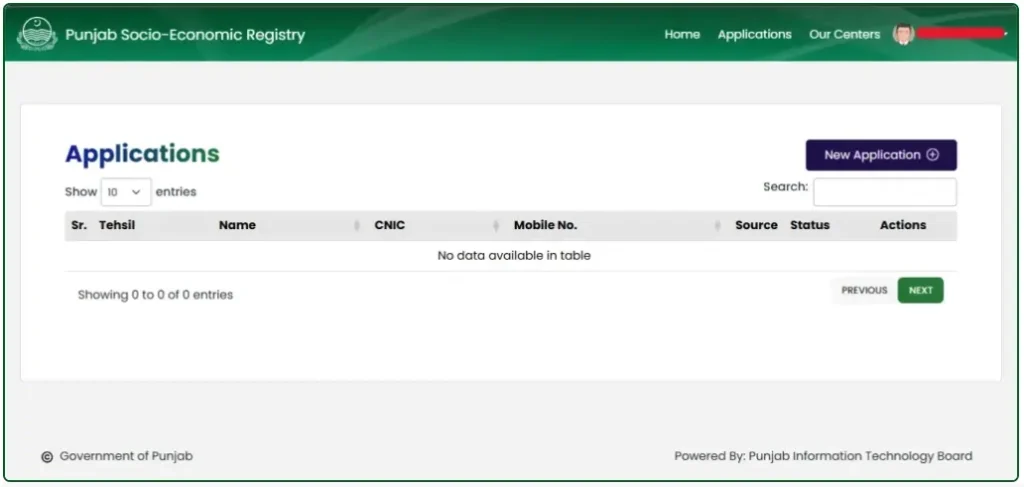
Click the “New Application” button to start applying for the specific PSER program.
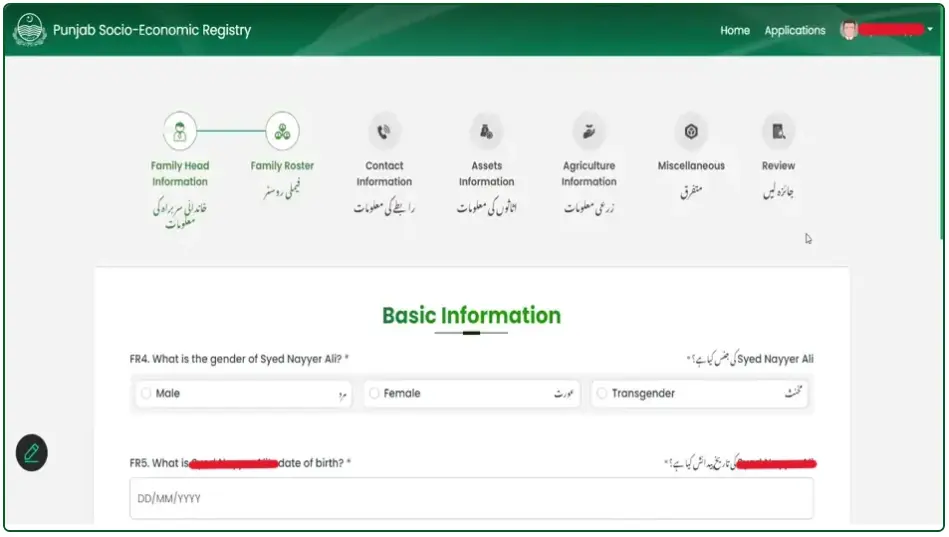
Basic Information
This section includes essential personal details such as your name, CNIC, date of birth, and contact number.
It helps verify your identity and ensures your registration matches official records.
Make sure all information is accurate to avoid delays in approval or verification.
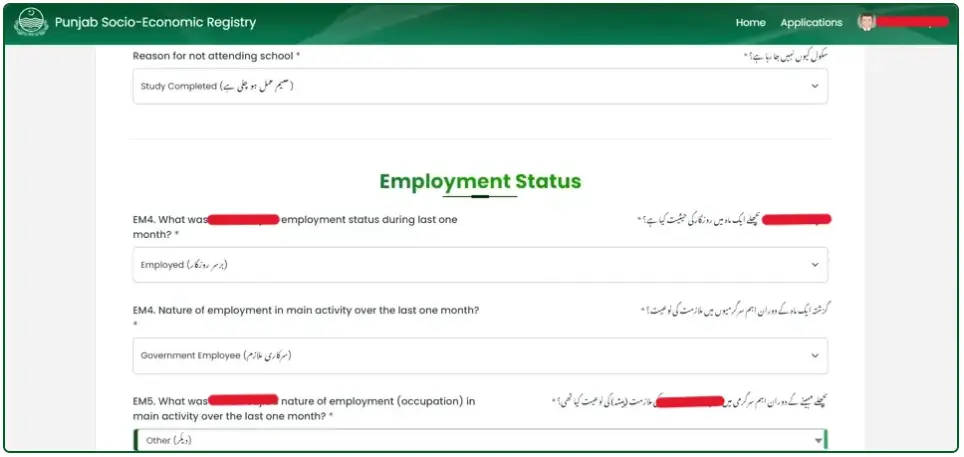
Employment Status
This section requires you to specify whether each family member is employed, unemployed, self-employed, or a daily-wage worker.
Accurate employment details help determine household income and eligibility for welfare programs.
Include occupation type and monthly earnings to ensure your information is verified correctly.
Enter Family Head, Data
Provide detailed information about the family head, including CNIC, occupation, and household responsibilities.
Enter Household & Personal Information
Include information about all family members, income sources, education levels, and employment status.
Housing Data
In this section, you share details about your home, such as ownership status, type of house, and monthly expenses.
Housing information helps evaluate living conditions and calculate your PMT score.
Provide accurate details about electricity, gas, and water usage for smooth approval.
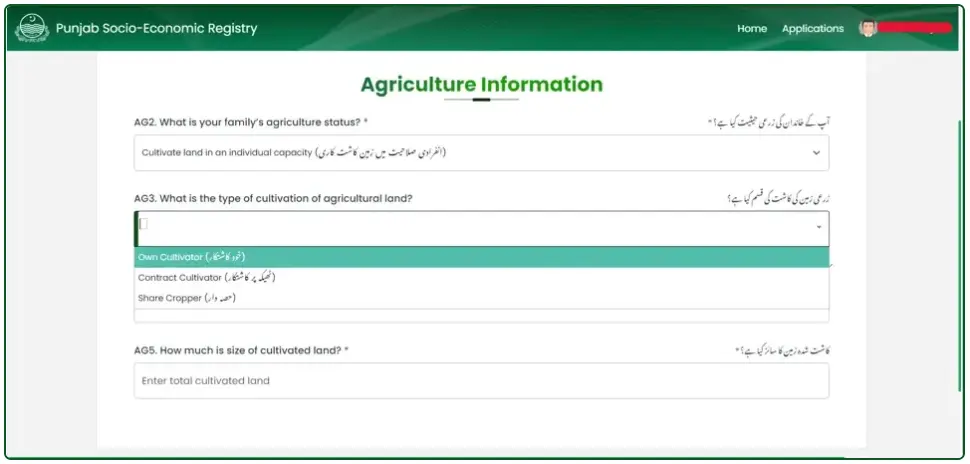
Agriculture Information
This section requires details about your agricultural land, including land size, type of crops, and farming activities.
It helps determine eligibility for farming subsidies, support programs, and income assessment.
Provide accurate land records and crop information to ensure proper verification and program benefits.
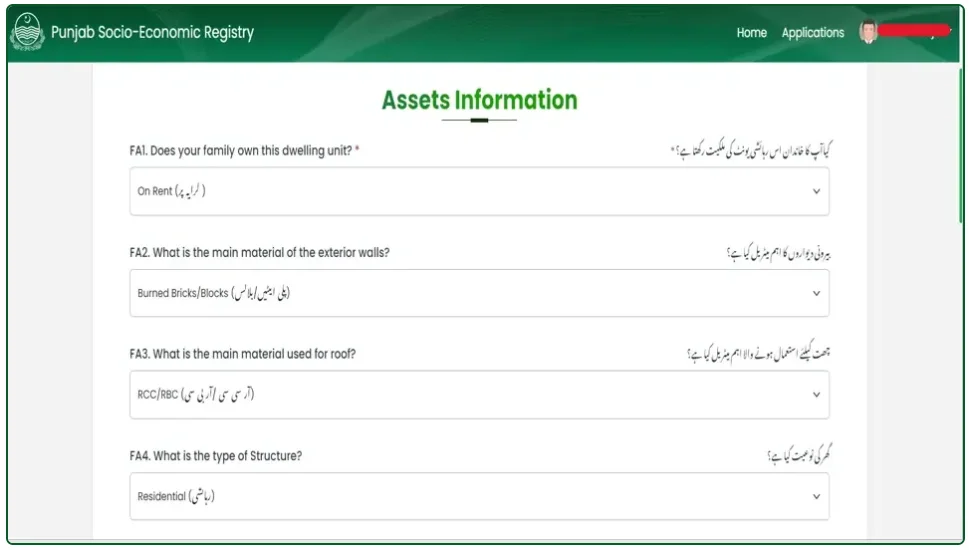
Assets Information
This step requires you to provide details about items your household owns, such as vehicles, appliances, or valuables.
Accurate asset information helps determine eligibility for government programs.
Make sure all entries match your real household situation to avoid verification issues.
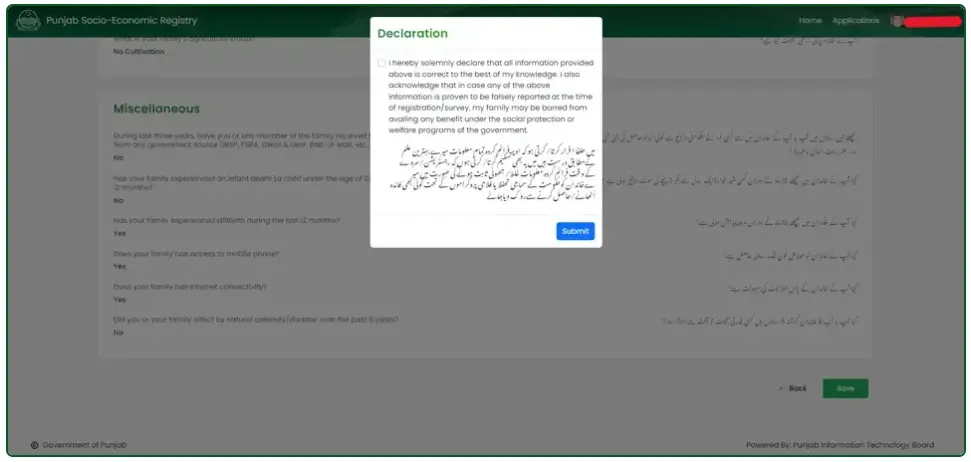
Review & Final Submission
Double-check all entered information. Submit the application and note any reference number or confirmation message.
If you’re not sure how to register, visit your nearest registration center and share your basic details. Once your information is added, you will be officially enrolled in the PSER program (پی ایس ای آر صارف کا اندراج). The team will review your data and confirm your eligibility. After approval, you can receive a monthly allowance of 12,000, 15,000, or 25,000 rupees based on your household’s needs.
Complete PSER Survey Process (Online + In-Person)
Prosperity Survey Overview
The Prosperity Survey collects detailed household data to determine eligibility for welfare programs. It ensures fair distribution of government assistance.
Modules Included in Prosperity Survey
Survey Sections
What to Do If the Survey Team Has Not Visited
You can request a survey visit through the portal or contact your local union council office for assistance.
How to Book a Survey Visit
Use the online scheduling tool on the PSER portal or contact local field teams.
How to Update Your Information
Once surveyed, citizens can update information through the portal if there are changes in family composition, income, or assets.
Offline Registration: Union Council Offices & Centers
List of Offline Registration Channels
Offline registration is available at Union Council offices, local facilitation centers, and designated government offices.
5,000+ Facilitation Centers
Punjab has established over 5,000 centers to help citizens complete registration and applications.
Required Documents for In-Person Registration
How the UC Staff Assists Families
Union Council staff guide citizens in filling out forms, verifying documents, and submitting the application correctly.
Offline Corrections & Complaint Handling
If errors occur during registration, UC offices can help make corrections. Complaints can also be registered and tracked locally.
PSER Programs & Schemes Linked With Registration (2026)
Major Programs Linked to PSER
Add Emerging Programs
Keep an updated section for new initiatives as they launch to maintain evergreen content relevance.
PSER Online Registration Ramzan Program
Understanding the PMT Score in PSER
What Is PMT Score
The Poverty Measurement Tool (PMT) score determines household eligibility for welfare programs.
How PMT Score Is Calculated
It considers income, assets, household size, and living conditions to rank socio-economic need.
Minimum and Maximum Thresholds
Each program sets PMT thresholds. Scores below the threshold are usually prioritized for assistance.
Why the PMT Score Determines Eligibility
The score ensures only deserving families receive benefits, promoting fairness and efficiency.
Common Reasons PMT Scores Change
How to Improve or Correct Your PMT Score
Submit accurate, updated information on the PSER portal or during survey visits. Incorrect or missing data may lower your score.
How to Check PSER Application Status (2026)
PSER Punjab Gov PK
Status Check on the Official Portal
Log in to your account at pser.punjab.gov.pk and check the “Application Status” tab.
SMS Status Check Methods
Send your CNIC to the designated SMS numbers (8171, 8070, 9999) to receive instant updates.
Using 9999, 8171, and 8070 integration, 8070, and
These government portals are linked with PSER to provide real-time updates on application progress and approvals.
Common Status Messages Explained
What to Do If Your Status Is Pending or Rejected
Troubleshooting: Common Issues & Solutions
Portal Not Loading
If the PSER portal fails to load, check your internet connection, use an updated browser, or clear your cache. You can also try accessing the site during off-peak hours to avoid heavy traffic.
OTP Not Received
Ensure your mobile number is correct and that you have network coverage. If you still don’t receive the OTP, request it again after a few minutes or contact the helpline.
Account Login Problems
Forgotten passwords or incorrect credentials can prevent login. Use the “”orgot Password””option to securely reset your account. Verify your CNIC and registered mobile number.
Incorrect Household Data
Check all entered family details carefully. If errors are found, use the “”dit Profile””feature or visit your Union Council office to request corrections.
Survey Not Completed
If your household survey hasn’t been completed, contact your local union council or use the portal to schedule a visit. Ensure all required information is ready for the survey team.
Wrong Family Head Assignment
An incorrect assignment can affect eligibility. Submit a request through the portal or visit your union council for correction.
How to Request Corrections
Log in to your account and select “”Request Correction.”Provide supporting documents or contact the Union Council for assistance with verification.
PSER Online Registration 2025 Last Date
What to Do If Survey Team Did Not Visit Your Home
How to Request a Home Visit
Use the pportal’s””chedule Survey Visit””option or contact the local union council office to request a team visit.
How to Update Your Details Online
After the survey, citizens can log in to update family information, address, income, or assets to maintain accurate records.
How to Confirm Your Survey Status
Check your application status online through the PSER portal or via SMS (8171, 8070, 9999).
When Field Visits Are Scheduled in 2026
Field teams operate throughout the year. Schedules are posted on the portal, and local union councils can provide specific visit dates for your area.
Safety, Privacy & Data Protection
How PSER Protects User Data
All data is encrypted and stored securely on government servers. Access is limited to authorized personnel only.
Why Data Collection Is Necessary
Data ensures that government assistance reaches eligible households and prevents misuse of welfare programs.
Fraud Prevention Measures
PSER uses CNIC verification, mobile OTPs, and cross-checks with other government databases to detect fraud.
Citizen Safety During Home Visits
Survey teams carry official identification. Citizens are advised to verify team credentials and report suspicious activity.
Government Verification Guidelines
All household information is validated through multiple checks to ensure accuracy and fairness in program distribution.
Important Links & Resources
Final Action
PSER for Special Groups
Frequently Asked Questions
Conclusion
The PSER (Punjab Socio-Economic Registry) is an important initiative by the Punjab Government to identify and support deserving families across the province. By collecting accurate household data, the program helps ensure that welfare benefits like financial aid, ration support, scholarships, and health services reach the people who truly need them. Citizens are encouraged to complete their PSER registration to benefit from upcoming government welfare programs.
Learn about PSER (Punjab Socio-Economic Registry), the Punjab GGovernment’sdigital household survey launched in 2024–2025, which provides transparent welfare support, including cash aid, ration, scholarships, and health services, to deserving families.
-
2JBet JazzCash & Easypaisa – Deposit and Withdrawal Guide
For Pakistani users exploring mobile gaming platforms, and other similar services often attract attention because of their convenient mobile-focused experience. At the same time, 2jbet users may want simple local payment options such as JazzCash and Easypaisa for managing account transactions. Understanding how deposits and withdrawals work can make the payment process easier and help…
-
883 V Come Game – Complete Guide to Features, Gameplay, and Safe Play
The 883 V Come Game has become a popular search term among users looking for an online gaming platform that offers entertainment, simple gameplay, and mobile accessibility. Whether you are hearing about it for the first time or want to understand how it works, this guide explains everything in a clear and easy-to-read format. Many…
-
10th Class Result Date 2026 Pakistan – Check All BISE Board Results by Roll Number, Name & SMS
The 10th Class Result Date 2026 is one of the most anticipated announcements for matric students across Pakistan. Every year, millions of students wait for their SSC Part-II results to take the next step toward college admissions and future studies. As the result day approaches, students also look for reliable information about the official result…
-
TEVTA (Technical Education & Vocational Training Authority): Complete Guide to Admissions, Courses, Jobs, Institutes, Web Portal & Services (2026)
What is TEVTA? Introduction to Technical Education & Vocational Training Authority TEVTA (Technical Education & Vocational Training Authority) is the leading public-sector organization responsible for promoting technical and vocational education across Punjab. It equips students with practical skills, industry-focused training, and professional certifications that improve employability in Pakistan and abroad. As a key part of…
-
Special Education Department Punjab – Latest Updates, STI Jobs 2026, Schools, Services, Programs & DGSE Guide
The Special Education Department Punjab plays an important role in providing quality education, rehabilitation, and support services to children with disabilities across the province. Over the years, the department has expanded its network of schools, introduced welfare programs, strengthened rehabilitation facilities, and invested in trained professionals to ensure that every child receives an education suited…
-
Punjab Land Record Authority (PLRA): Complete Guide to Online Land Records, Services & Property Verification (2026)
Buying, selling, inheriting, or verifying land in Punjab begins with one important step: checking the official land record. In the past, this often meant visiting government offices, waiting for records to be located, and relying on manual registers that could take days to process. Today, the process is far more straightforward, thanks to the Punjab…


